Just as ETFs have made public stock market investments more accessible and easier to execute, a wave of innovation has lowered barriers to entry in private markets.
Illiquid assets like real estate, private equity and private credit have been repackaged for individual investors, with lower minimums, friendlier tax treatment and less paperwork.
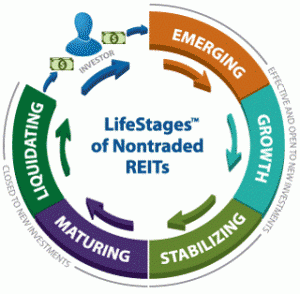
Among these new structures are interval funds, tender offer funds, non-traded BDCs and non-traded REITs, each offering some form of periodic liquidity. Collectively, they are known as “semi-liquid” funds.
But as recent headlines on private credit remind us, the “semi” in semi-liquid deserves more attention than it typically gets. To understand why, it helps to step back and look at the original private market investment vehicle: the drawdown fund.